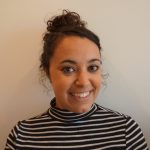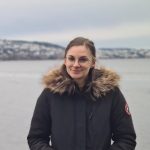



Maria is a marine mammal biologist. She moved from Greece to Ireland to do a master’s in marine biology, and stayed there to complete her PhD at University College Cork. Her doctoral studies investigated bottlenose dolphin abundance and distribution patterns. She has conducted postdoctoral research in both Ireland and Greece, as a member of collaborative projects that examined overlaps between human activities and marine mammal movement: in MaREI (Science Foundation Ireland’s Centre for Energy, Climate, and Marine Research), she helped map and measure the risk of different species’ exposure to anthropogenic underwater noise; working at the Aristotle University of Thessaloniki, she quantified the interactions between cetaceans and artisanal fisheries, as well as the environmental impact of small-scale fishing. Maria has also taught marine biology at Perrotis College (American Farm School, Thessaloniki).
Maria’s research has always been driven by the urge to develop simpler and more sustainable ways of doing things, whether that involves using platforms of opportunity rather than expensive and logistically challenging dedicated surveys to monitor cetacean populations or calculating the optimal number of fishing nets to minimise a vessel’s carbon footprint. She also believes strongly that research and management of systems involving human livelihoods should include user participation. As such, she has incorporated the knowledge and lived experience of fishers when designing fishery surveys or experimenting with alternative fishing methods.
Maria joined NAMMCO in 2023, as Deputy Secretary responsible for the scientific aspects of the Secretariat’s work, including supporting the Scientific Committee and its Working Groups and maintaining the species pages on the website. Her aim is to contribute her expertise towards the development of sustainable practices in the Arctic, as well as improved communication and collaboration between scientists and managers. Given her background, one of her most absorbing tasks is mapping the risk of marine mammal by-catch in different fishing gears and areas, as one of the goals of the Working Group on By-catch.
When she isn’t studying the sea, Maria enjoys walking beside it, swimming in it, or kayaking on it. She also dabbles in arts and crafts of every kind and loves getting lost in bookstores.
Mobile: +47 939 56 283