



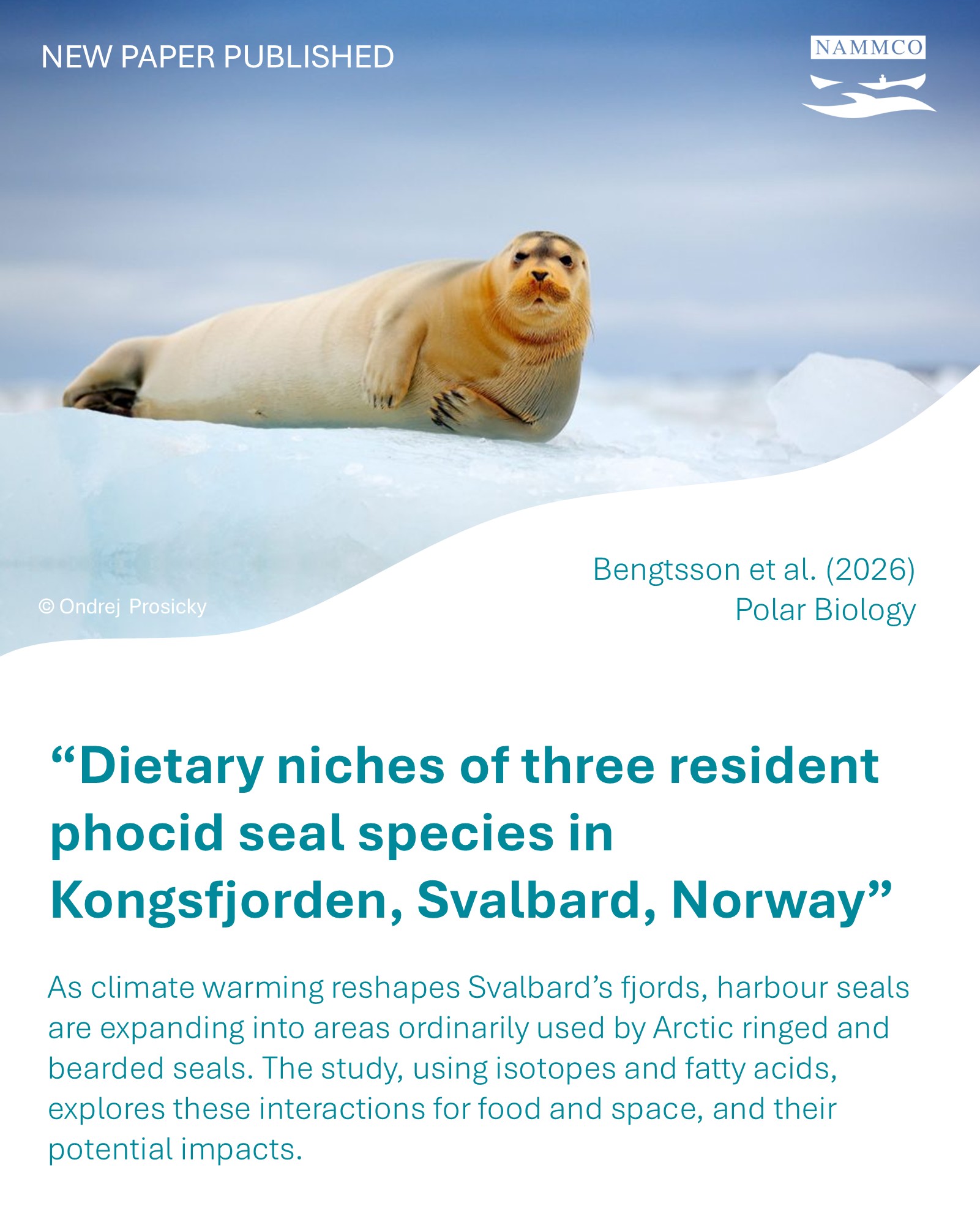
27 October 2026: New study explores the dietary niches of three resident seal species in Svalbard
A study by Bengtsson and colleagues, titled “Dietary niches of three resident phocid seal species in Kongsfjorden, Svalbard, Norway”, was published in the journal Polar Biology in June 2026.
Climate change is increasing the influx of warmer water in fjords of the Svalbard Archipelago. This shift towards more Atlantic-like conditions is accompanied by the increased occurrence of Atlantic species in Arctic environments (aka Atlantification).
Until recently, ringed and bearded seals—exclusively Arctic, ice-dependent species—were the only seals to reside year-round in Kongsfjorden, a fjord located on the west part of Svalbard. Harbour seals now co-occur with the Arctic seals in the fjord, raising questions about potential competition for space and resources.
Using stable isotope ratios and fatty acids, two types of chemical tracers that reflect the prey consumed, Bengtsson and colleagues investigated the feeding strategies of the three species and their dietary niche overlap in Kongsfjorden, assessing potential competition among them. For that purpose, they collected these tracers from the skin and blubber of 41 harbour seals, 11 ringed seals, and four bearded seals.
The study showed that ringed seals occupied a narrower dietary niche, feeding mainly on prey living in the water column near glacier fronts. Harbour seals had a more generalist diet, eating both animals in the water column and the sea floor and feeding in shallow, near-shore habitats. Bearded seals showed the strongest overlap with harbour seals, particularly in their use of shallow, near-shore prey that lives on the sea floor and higher in the food chain. This overlap in prey suggests greater potential for competition between harbour and bearded seals.
As the warming of the Arctic continues, harbour seals may expand further across Svalbard, increasing potential competition with local Arctic seals that depend on sea-ice habitats. The study highlights the importance of further research to better understand these potential interactions and their implications for Arctic seal communities.
Read the full paper by Bengtsson et al (2026) here: https://doi.org/10.1007/s00300-026-03507-9
Photo credit: Ondrej Prosicky