



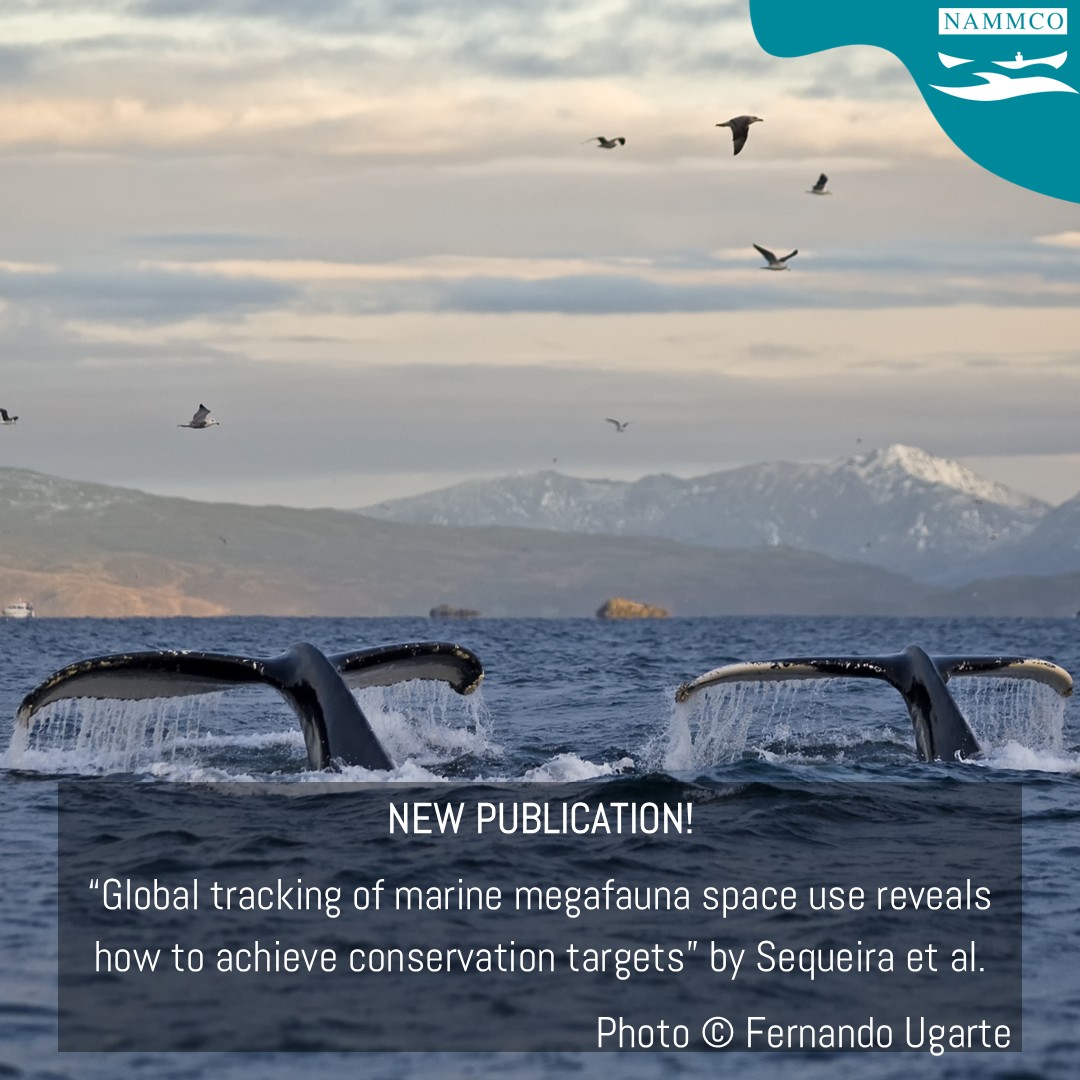
31 March 2026: A study on the global tracking of marine megafauna space use
A study by Sequeira and colleagues, titled “Global tracking of marine megafauna space use reveals how to achieve conservation targets”, was published in the journal Science in June 2025.
In recent years, the world’s nations have made agreements, like the United Nations High Seas Treaty and the Kunming-Montreal Global Biodiversity Framework, aiming to conserve at least 30% of the world’s oceans, prevent the loss of important biodiversity areas and halt human-induced species extinctions.
There is limited knowledge of how various marine species use space, particularly large migratory species such as marine megafauna (marine mammals, sea turtles, sharks and other large predatory fishes, and seabirds). This makes it challenging to define clear pathways for achieving the conservation targets.
Sequeira and colleagues assembled a tracking dataset of 15,845 animals from 121 different species of marine megafauna. They used this dataset to analyse how these large, highly mobile species were using space throughout the world’s oceans, including determining which areas served as migratory corridors and for residency.
The tracked animals generally spent most of their time in waters outside of any country’s jurisdiction (known as the “High Seas”), but most migratory and residency areas were found closer to shore, inside national waters. This means that countries can individually protect most of the crucial areas for wildlife by adopting measures within their national waters.
However, the study concluded that the current goal of protecting 30% of the world’s oceans is unlikely to halt the loss of important biodiversity areas, as more than half of the areas identified as important for marine megafauna would remain outside of this threshold. Aside from spatial protection, additional mitigation measures will be needed, such as stronger fisheries regulations and wildlife–ship traffic separation schemes.
Read the full paper by Sequeira et al. HERE.
Photo credit: Fernando Ugarte